ORIGINAL STUDIES
BACKGROUND: Diabetes mellitus is a socially significant disease with a high prevalence. To improve the quality of medical care, disease registries are used all over the world, which allow us to analyze various indicators and assess their dynamics.
AIM: Analysis of epidemiological indicators of adult patients with type 1 diabetes mellitus (DM1) in Moscow in 2025 compared with similar indicators in 2018 according to the State Register of Diabetes Mellitus (SRDM).
MATERIALS AND METHODS: The study was conducted on the basis of the database of the Moscow segment of the State Register of Diabetes Mellitus (SRDM) as of 31.12.2025, in which 21 296 adult patients with DM1 were registered at the time of the study. The study is a full-design retrospective cohort analytical epidemiological study.
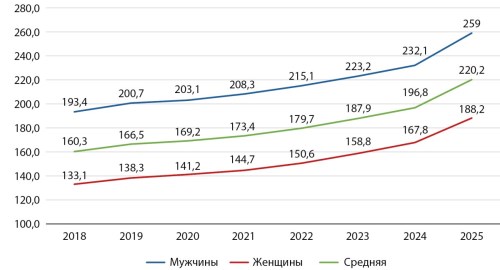
RESULTS: From 2018 to 2025, the number of patients with DM1 increased by 19.4%. At the same time, there was no significant dynamics in the level of HbA1c and the proportion of patients who reached the HbA1c level of less than 7.0%. The reported prevalence of diabetes complications increased from 55.1% to 63.1% during the study period. The most common complications, as in 2018, are: diabetic neuropathy (50.2%), diabetic retinopathy (31.4%) and diabetic nephropathy (24.9%) (Fig. 7). Most often, patients with DM1 receive basic insulin therapy using insulin analogues. At the same time, the proportion of patients using only an ultra-short insulin analog with an insulin dispenser (pump) increased from 4.2% to 11.9%.
CONCLUSION: According to the State Register of Diabetes Mellitus (SRDM) there has been an increase in the number of patients with DM1, as well as the reported incidence of its complications. Diabetic polyneuropathy, nephropathy, and retinopathy are most often detected. More than 90% of patients receive human insulin analogues in multiple injection regimens or using insulin dispensers.
BACKGROUND: Clinically healthy siblings of patients with type 1 diabetes (T1D) exhibit immunogenetic and metabolic heterogeneity, which limits the accuracy of individual risk assessment when single markers are used. Integration of HLA risk, islet autoantibody (AAb) status, and metabolic parameters may improve identification of the preclinical stages of T1D.
AIM: To identify immunogenetic-metabolic profiles among clinically healthy siblings of patients with T1D based on the integration of HLA risk, AAb status, and metabolic parameters, and to assess their potential role in characterizing the preclinical stage of the disease.
MATERIALS AND METHODS: This multicenter prospective cohort study included 420 participants: 254 patients with newly diagnosed T1D (aged 0–17 years) and 166 of their healthy siblings. AAb (IAA, GADA, IA-2A, ZnT8A, ICA), glycated hemoglobin (HbA1c), and C-peptide were measured, and HLA typing of class II loci (HLA-DR and HLA-DQ) was performed. Immunogenetic-metabolic profiles were identified using two-step cluster analysis. Statistical analyses included nonparametric tests, χ² test, logistic regression, ROC analysis, and event-free survival analysis (p < 0.05).
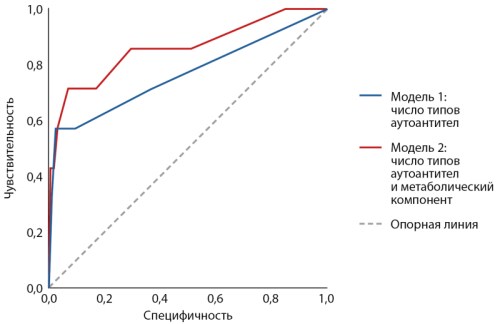
RESULTS: Among the 166 siblings, two-step cluster analysis (silhouette measure 0.49) identified four immunogenetic-metabolic profiles: isolated genetic (21%) — high HLA risk without autoantibodies or metabolic abnormalities; early autoimmune (22%) — ≥1 autoantibody and high HLA risk without significant metabolic changes; metabolic (27%) — absence of autoantibodies, reduced C-peptide, and predominance of low/intermediate HLA risk; and combined (31%) — ≥1 autoantibody, HbA1c ≥5.4% in 100%, reduced C-peptide < 0.54 ng/mL in 24%, and high HLA risk in 59%. During 7.1 years of follow-up, T1D developed in 4.2% of siblings and was numerically more frequent in the combined profile (7.8%) without statistically significant differences . A significant linear trend was observed for increasing frequencies of IA-2A, ZnT8A, and GADA toward T1D onset (p < 0.001). ZnT8A were an independent predictor of belonging to the combined profile. The median number of autoantibody types was higher at T1D onset (3 vs 0; p=0.006). Inclusion of reduced C-peptide was associated with improved discriminative performance of the model (AUC=0.857).
CONCLUSION: Distinct immunogenetic-metabolic profiles were identified in clinically healthy siblings of patients with T1D based on the combination of HLA risk, AAb status, and metabolic parameters. The profile characterized by concurrent autoimmune activity and reduced β-cell functional reserve was characterized by a higher frequency of T1D onset.
BACKGROUND: The term “diabetic encephalopathy” or psychoorganic syndrome (POS) of diabetic origin) does not appear in current classifications of diabetic complications but is eventually used by researchers and physicians. However, evidence for its existence has been scarce and contradictory.
AIM: To identify epidemiological, anamnestic, clinical and psychological characteristics of POS in young patients with T1DM and to assess its possible association with factors specific and non-specific for diabetes.
METHODS: This single center, cross-sectional study consecutively enrolled T1DM in-patients aged 18 to 45 years with >1 year diabetes curation, without exclusion criteria (pregnancy, conditions hindering testing, and comorbidities that could cause organic brain damage). The clinical diagnosis of POS was made by a psychiatrist. In addition to clinical and laboratory examinations, cognitive functions (MMSE, Roshchina-Balashova-Korsakova scales, Wechsler, proofreading, and digit span tests) and emotional/personality characteristics (Multiple Minnesota Personality Inventory [MMPI] and CES-D depression scale) were assessed. In the univariate analysis, differences between patients with and without POS were tested with Mann-Whitney and χ2 tests. Multivariate regression analysis was performed to identify characteristics independently associated with POS.
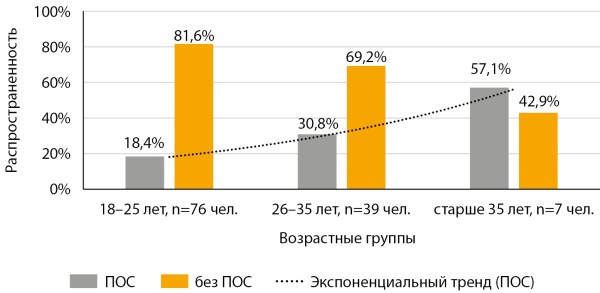
RESULTS: The study consecutively recruited 122 patients with T1DM (60 men) aged 18 to 40 years with diabetes duration of 1 to 27 years, age of onset 1 to 32 years, and glycated hemoglobin (HbA1c) level of 9.5±2.5% (range, 5.1 to 20.6%). POS was clinically diagnosed in 30 patients (24.6%). In the univariate analysis, patients with POS, compared to those without POS, were older, had higher prevalence of diabetic retinopathy, past history of severe hypoglycemia, arterial hypertension (AH), current depression, and a more pronounced decline in cognitive functions (mainly working memory, attention, visospatial skills, analysis and synthesis, generalization, and speed of task completion). There were no differences in sex ratio, age of onset and duration of diabetes, HbA1c levels, and past history of diabetic ketoacidosis. Among the possible etiologies in the POS group compared to the non-POS group, severe infections (13.3 and 0%, p=0.003), prenatal injuries (60.7 and 43%, p=0.006), and controlled AH (33.3 and 13%, p=0.012) were more common. The biggest difference between-group was found for a combination of factors unrelated to diabetes (63.3 and 28.3%, p=0.001), especially brain trauma, alcohol abuse, perinatal injuries, severe infections, and AH. The multivariate analysis confirmed the significance of the combination of non-diabetic brain damaging factors in POS etiology (odds ratio [OR] 1.8, 95%CI 1.0–3.1, p=0.043), and revealed independent associations of POS with depression, diastolic blood pressure, and an inverse association with occupational mental complexity (OR 0.7, 95%CI 0.4–1.0, p=0.076). The multivariate regression did not confirm an independent association of POS with any of the potential diabetes-related factors of brain damage.
CONCLUSION: The results obtained do not confirm the specific diabetic etiology of POS in T1DM and probably allow considering POS (encephalopathy) in patients with T1DM to be rather a multicausative comorbid condition of mostly exogenous origin.
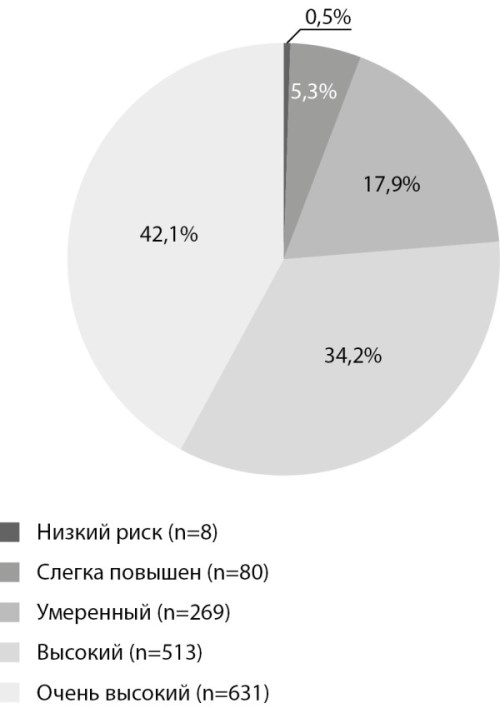
BACKGROUND: In the context of a sustained increase in the prevalence of obesity and its associated cardiometabolic complications, the importance of identifying additional risk factors is growing, with particular emphasis on sleep disturbances and reduced sleep duration, which contribute to the development and progression of metabolic disorders.
AIM: To assess the severity of disturbances in the sleep–wake cycle in patients with overweight and class I obesity across different categories of risk for disorders of carbohydrate metabolism according to the FINDRISC scale.
MATERIALS AND METHODS: The study included 1,500 Caucasian patients of both sexes, aged 45–70 years, with a BMI ≥25 kg/m². All participants completed questionnaires: FINDRISC (to estimate the risk of developing diabetes mellitus), PSQI (Pittsburgh Sleep Quality Index, last month), and ISI (Insomnia Severity Index).
RESULTS: Retrospective analysis showed that 96.6% of patients aged 45–64 years were overweight or had class I obesity. At the second stage of the study, among 782 patients with moderate and high 10‑year risk of type 2 diabetes according to the FINDRISC, sleep disturbances were documented in 696 (89.0 %) individuals.
CONCLUSION: In patients with overweight and class I obesity who have a moderate or high 10‑year risk of type 2 diabetes according to the FINDRISC, disturbances of the sleep–wake cycle should be additionally considered as a modifiable predictor of metabolic disorders.
BACKGROUND. Patients with type 1 diabetes mellitus (T1DM) are prone to earlier development of sarcopenia due to insulin deficiency, hyperglycemia, oxidative stress, and mitochondrial dysfunction. A pressing challenge in the management of these patients is the search for standardized diagnostic tools for the timely detection and monitoring of sarcopenia.
OBJECTIVE. Comparative assessment of laboratory serum myokine levels in relation to muscle mass, strength, and function in postmenopausal women with type 1 diabetes and controls without diabetes.
MATERIALS AND METHODS. A single-center, cross-sectional comparative study was conducted in women with type 1 diabetes (n=40) and a control group (n=40) aged 50–75 years. The SARC-F questionnaire, laboratory parameters (myostatin, follistatin, cystatin C, lipocalin 2, IGF-1), muscle mass (iDXA densitometry), strength (wrist dynamometry), and function (short-form exercise battery) were assessed. Statistical processing was performed in Statistica 14.0.0.15, IBM SPSS Statistics 23 using the Mann-Whitney, Fisher, and Spearman correlation tests.
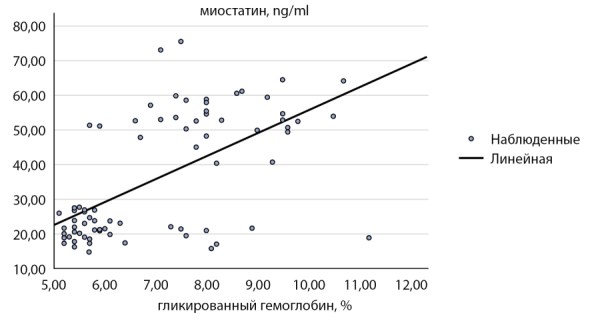
RESULTS. The age of the patients was 60 [56;64] years in the T1DM group and 64 [60;66] years in the control group (p=0.029). Glycated hemoglobin (HbA1c) in the T1DM group was 8.0% [7.6;9.3] with a diabetes duration of 26 [13;42] years. The myostatin level was significantly higher in T1DM 52.73 [46.45;58.26] mg/ml versus 21.46 [19.07;24.74] in the control (p < 0.001) and positively correlated with HbA1c (r=0.544, p < 0.001), but not with muscle strength and mass. HbA1c negatively correlated with the time it took to get up from a chair 5 times. No differences were found in the levels of follistatin, lipocalin 2, cystatin C. Wrist dynamometry strength and walking speed were lower in the T1DM group with a tendency to statistical significance. The median IGF-1 was lower in diabetes (92.7 vs. 114.1 ng/ml, p=0.014) and positively correlated with muscle strength (r=0.472, p < 0.001). The sarcopenia index negatively correlated with muscle strength (r=-0.402, p=0.021) and positively with HbA1c (r=0.514, p=0.035). Severe sarcopenia (according to EWGSOP2) was diagnosed in only one patient with T1DM, whose myostatin level did not differ from the range of patients without sarcopenia.
CONCLUSION. Thus, patients with type 1 diabetes have higher myostatin levels, which correlates with with the level of HbA1c. Low functional capacity in patients with type 1 diabetes is associated with HbA1c levels, but is not directly related to myostatin levels.
BACKGROUND: The increase in the incidence of diabetes mellitus, including type 1 diabetes in children, is a priority issue for the national healthcare system. Currently, due to the development of medical technologies, there has been a significant increase in the number of insulin pump dispensers available to patients. It is an important task for the medical community to conduct research aimed at evaluating the effectiveness and safety of these medical devices.
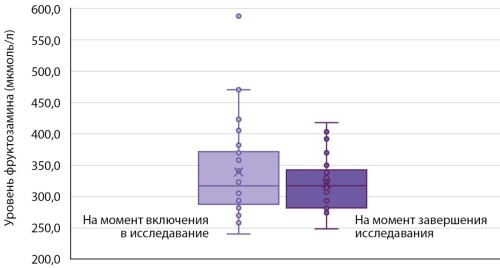
AIM: Analysis of the use of the TruCare III insulin pump (Wuxi Apex Medical Co., Ltd., China) which is registered for use in patients with type 1 diabetes mellitus aged 4 to 17 years, based on four main criteria: effectiveness, safety, tolerability, and ease of use.
MATERIALS AND METHODS: The open-label comparative study involved 30 children aged 8 to 17 years with a diagnosis of type 1 diabetes mellitus who had been receiving insulin therapy with an insulin pump for at least 3 months at the time of the study. The study was conducted at the Russian Children's Clinical Hospital, a branch of the Pirogov Russian National Research Medical University of the Ministry of Health of the Russian Federation (Pirogov University).
RESULTS: The TruCare III insulin pump, manufactured by Wuxi Apex Medical Co., Ltd. (China), fully complies with modern medical technology standards. It has demonstrated high efficiency, safety, good tolerability, and ease of use.
CONCLUSION: In the absence of contraindications to pump-based insulin therapy, the TruCare III insulin pump can be recommended as an alternative to other insulin pump models registered in the Russian Federation for patients with type 1 diabetes, including children and adolescents aged 4 to 17 years.
BACKGROUND: Type 1 diabetes mellitus (T1D) is an autoimmune disorder characterized by impaired β-cell function and insulin deficiency, with emerging evidence implicating dysregulation of the insulin-like growth factor (IGF) axis in its pathophysiology.
AIM: This research aimed to explore the levels of total insulin-like growth factor-2 (IGF-2) in sera of Iraqi adult patients with T1D and correlate these findings with insulin-like growth factor-1 (IGF-1) levels and other biochemical parameters.
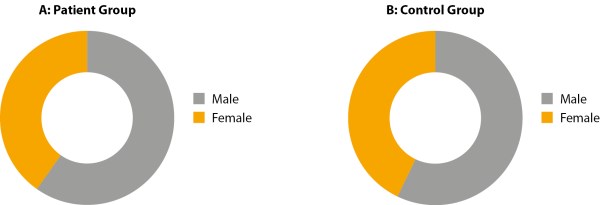
MATERIALS AND METHODS: A total of 160 participants, including 80 patients with a history of T1D and 80 healthy controls were recruited from the National Diabetes Center, Mustansiriyah University. All Blood samples from both groups were analyzed for IGF-1, Fasting Blood Sugar (FBS), Glycated Hemoglobin (HbA1c), Lipid Profile, and Renal Function Markers. At the same time, IGF-2 was assessed via an enzyme-linked immunosorbent assay kit.
RESULTS: Statistical analysis shows significant differences in all studied factors between T1D patients and control groups (p< 0.001). Notably, IGF-1 levels were significantly lower in T1D patients (median: 147 mg/dl) compared to controls (median: 215 mg/dl). In comparison, IGF-2 levels were markedly elevated in patients (median: 1.15 mg/dl) versus controls (median: 0.37 mg/dl). Strong positive correlations were observed between FBS, HbA1c, and IGF-2, whereas negative correlations were found between these parameters and IGF-1. Additionally, BMI showed positive associations with FBS, HbA1c, and IGF-2 but negative associations with IGF-1 and IGF-1/IGF-2 Ratio.
CONCLUSION: These findings indicate significant changes in the IGF system in patients with T1D. In particular, changes in IGF-1 and IGF-2 levels are thought to be related to the metabolic disturbances seen in T1D. However, larger, long-term studies are needed to better understand the clinical significance and potential biological mechanisms of these results.
REVIEWS
Type 2 diabetes mellitus (T2DM) represents a significant risk factor for the development of ocular surface pathology, with the prevalence of dry eye syndrome, meibomian gland dysfunction, and chronic blepharitis exceeding that in the general population by 2–3 times. This review provides a comprehensive analysis of the role of trace element imbalance in the formation and progression of ocular surface diseases in T2DM. Particular attention is paid to the aspects of the influence of deficiency or excess of zinc, copper, selenium, magnesium, and iron on key pathogenetic links: oxidative stress, chronic inflammation, microangiopathy, neuropathy, and impaired reparative processes. Modern data on changes in the trace element profile in the systemic bloodstream, tear fluid, and meibomian gland secretion in patients with T2DM are systematized. The relationships between specific disorders of trace element homeostasis and clinical phenotypes of ocular surface damage are considered. Evidence is presented indicating that trace element imbalance acts not as a passive marker, but as an active participant in the pathological cascade, that determines the nature and severity of ophthalmic manifestations of T2DM. Promising research directions are outlined, including the development of methods for non-invasive assessment of the ocular surface trace element status, the creation of targeted correction tools, and the integration of the trace element approach into personalized algorithms for managing patients with diabetic eye involvement.
The evolution of type 2 diabetes mellitus (T2DM) treatment has contributed to the emergence of a disease-modifying, cardio-renal-hepatocentric approach in the global medical community. This has shifted the focus of therapy from simple glycemic control to comprehensive organ protection, driven by a growing understanding of the relationship between hyperglycemia and the development of cardiovascular, renal, and hepatic complications. Current clinical guidelines emphasize the importance of combining hypoglycemic agents with additional organ-protective properties, such as sodium-glucose cotransporter type 2 inhibitors (SGLT2 inhibitors) and glucagon-like peptide-1 receptor agonists (GLP-1 agonists). At the same time, it is noted that for patients with low and moderate risk of complications and limited resources, traditional medications, primarily metformin and sulfonylurea derivatives (SU), remain relevant. This review analyzes current recommendations for the treatment of type 2 diabetes mellitus (T2DM) and provides a detailed discussion of the advantages and limitations of sulfonylureas (SUs), as well as the fixed-dose combination of glibenclamide and metformin (Glucovance). This combination offers a synergistic effect, high glucose-lowering activity, cost-effectiveness, and ease of use, which is especially important for patients with marked hyperglycemia and low adherence to therapy. The article discusses the indications for prescribing the fixed-dose combination based on the T2DM phenotype, compares the pros and cons of “old” and “new” medications, and evaluates the potential for combining sulfonylureas and metformin with modern organoprotective agents.
Glucovance remains a popular and effective tool in the endocrinologist’s arsenal, especially when balancing treatment efficacy, safety, and cost.
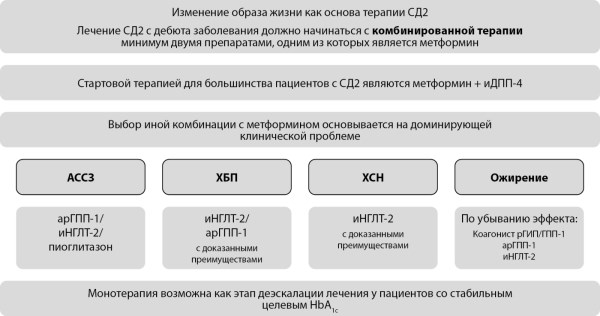
Glycemic targets remain a challenge for most patients with type 2 diabetes (T2D). In many cases, this is due to the patient’s non-compliance with the treatment regimen, insufficient self-monitoring, and delayed intensification of therapy. However, these challenges have been present for many years, and even new classes of antidiabetic drugs have not significantly changed the proportion of individuals with optimal target glycated hemoglobin levels of < 7%. Usually the treatment strategy in T2D patients requires gradual intensification from monotherapy to combination therapy, and afterwards to insulin. However, despite the high proportion of patients who do not achieve target glycemic levels, most patients receive only one medication for the first 5-8 years of treatment. Therefore, there is a need to start T2D therapy with combination of drugs instead of monotherapy. This article provides a rationale for this transition and suggests strategies for implementing it.
CASE REPORT
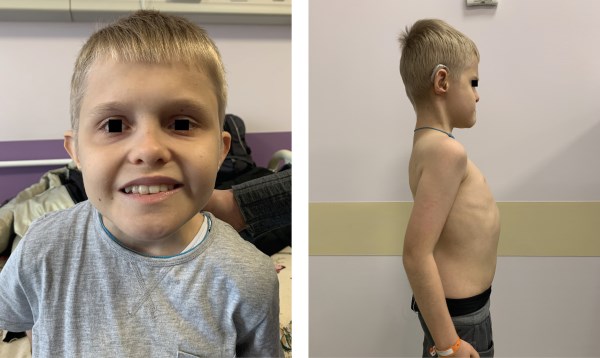
CHARGE syndrome is a rare hereditary disorder (estimated by various authors to have an incidence of 1:10,000 to 1:15,000 newborns) caused by the presence of pathogenic variants of the CHD7 gene. The acronym «CHARGE» stands for coloboma, heart disease, atresia of the choanae, retarded growth and development, genital hypoplasia, and ear anomalies. Lenz syndrome (LS) is a rare genetic disorder (with an incidence of 1:10,000 in the population) most often caused by mutations in the NAA10 gene, which shares a number of phenotypic features with the syndrome described. LS clinically presents with microphthalmia/anophthalmia associated with multiple multisystem malformations. We present a unique clinical case of type 1 diabetes mellitus (T1DM) combined with CHARGE syndrome. This article discusses the challenges of differential diagnosis between CHARGE and Lenz syndromes in a child with additional T1DM with extremely low insulin requirements and severe cachexia associated with nutritional deficiency.

This work is licensed under a Creative Commons Attribution-NonCommercial-NoDerivatives 4.0 International License (CC BY-NC-ND 4.0).
ISSN 2072-0378 (Online)