Preview

Diabetes mellitus

Advanced search

About

Since 1998 the “Diabetes Mellitus” (or “Sakharni Diabet”) Journal publishes timely articles, balancing both clinical and experimental research, case reports, reviews and lectures on pressing problems of diabetology. The Journal is aimed to provide a forum to discuss etiology and pathogenesis, clinical features, modern diagnostic and treatment approaches to diabetes mellitus and its complications, as well as associated conditions.

The Journal:

  • features original research articles, reflecting world diabetology development;
  • issues thematic editions on specific areas (diabetic nephropathy, diabetic neuropathy, diabetic retinopathy, etc.);
  • publishes chronicle of major international congress sessions and workshops on diabetes mellitus, as well as state-of-the-art guidelines;
  • is intended for scientists, diabetologists, endocrinologists and specialists of allied trade, general practitioners, family physicians and pediatricians.

Editor-in-Chief

Ivan I. Dedov, PhD, Professor (ORCID: 0000-0002-8175-7886)

Indexation

The Diabetes Mellitus journal is currently indexed in Scopus (Elsevier), Emerging Sources Citation Index (Web of Science, Clarivate Analytics), Google Scholar, DOAJ and Russian Science Citation Index (eLibrary.ru).

Access to the content

All accepted articles in the Diabetes Mellitus journal are published in Gold Open Access (in accordance with Budapest Open Access Initiative) format with Free Full-text access to all articles via several websites (dia.endojournals.ruwww.elibrary.ruwww.cyberleninka.ru) and mobile applications for iOS® (available in AppStore). All accepted articles publish with the Creative Commons International license (CC BY-NC-ND 4.0) for more freely distribution and usage worlwide.

The journal is open for English and Russian language manuscripts. All English language manuscripts are published in bilingual format (with help of Russian association of endocrinologists the editorial team makes translations for all accepted english-language articles). So, the journal provide an additional readers auditory for published articles. 

Current issue
Vol 29, No 2 (2026)
View or download the full issue PDF (Russian)

ORIGINAL STUDIES

104-136 1718
Abstract

BACKGROUND. The system for clinical and epidemiological monitoring of diabetes mellitus (DM) in the Russian Federation (RF) was established by Endocrinology Research Centre in 1996 as part of the Federal Program "Diabetes Mellitus." The DM database (previously the registry) has become a key tool for analyzing the most important indicators of patients with DM, necessary for assessing the clinical status and the effectiveness of therapeutic strategies to improve the quality of care and make management decisions in healthcare.

AIMS. To analyze epidemiological and clinical-therapeutic DM indicators: prevalence, incidence, age of onset, carbohydrate metabolism control and the proportion of obese patients, changes in the structure of hypoglycemic therapy (HLT), the prevalence of diabetic complications in the Russian population of DM patients in the RF.

MATERIALS AND METHODS. Research object: "Database of Clinical and Epidemiological Monitoring of Diabetes Mellitus in the Russian Federation," including patients with diabetes mellitus from 89 regions of the Russian Federation (Registration Certificate No. 2020622447, http://diaregistry.ru), copyright holder: Endocrinology Research Centre. Data extraction date: January 1, 2026. The data are presented as of 01.01.2026 and in dynamics.

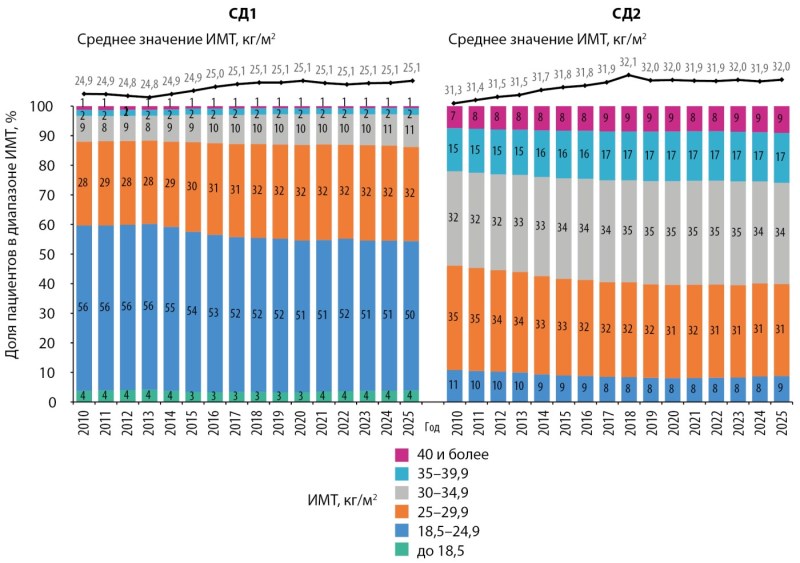
RESULTS. The total number of DM patients in the RF as of 01.01.2026 was 5,814,928 (3.9% of the Russian population), of which 308,605 (5.3%) had type 1 diabetes (T1DM), 5,366,995 (92.3%) had type 2 diabetes (T2DM), and 139,328 (2.4%) had other types of diabetes. Over 30 years of clinical and epidemiological monitoring in the period 1996–2025, the prevalence increased as follows: T1DM by 3.3 times from 62.0 to 205.7/100 thousand population, T2DM by 8.6 times — from 416.6 to 3569.0/100 thousand population. The incidence increased in T1DM by 1.3 times from 6.3 to 8.1/100 thousand population; in T2DM by 4 times from 55.9 to 259.8/100 thousand population. Among the causes of death, cardiovascular (CV) pathology (heart attack, stroke, heart failure, acute CV disorders) ranks first, accounting for 36.9% T1DM and 51.1% of T2DM. Life time with diabetes in the period 2010–2025 increased: T1DM 15.3→20.4 years, T2DM 10.2→11.8 years. The number of patients with the target HbA1c level <7% in 2010–2025: T1DM 24.4%→32.5%, T2DM 41.4%→48.4%. The dynamics of prevalence of the main diabetic complications in adult patients in 2010→2025 with T1DM/T2DM was: diabetic coma 2.5%→1.4%/0.15%→0.03%, neuropathy 43.8%→47.4%/22.3%→22.9%; chronic kidney disease (CKD) 21.0%→26.3%/5.1%→23.1%; diabetic retinopathy 38.5%→32.3%/17.2%→10.7%; diabetic foot syndrome 5.2%→2.9%/2.3%→1.0%; myocardial infarction 1.5%→1.1%/4.0%→3.4%; coronary heart disease (CHD) 5.1%→2.3%/14.9%→8.3%; chronic heart failure (CHF) 0.1%→0.9%/0.5%→3.8%; cerebrovascular disease 1.9%→1.3%/4.6%→4.0%; amputations 1.4%→1.3%/0.7%→0.79%. Traditional medications predominate in the structure of cardiovascular diseases in T2DM: metformin accounted for 75.7%, sulfonylureas 36.9%, and insulins 17.7%. iDPP4, iSGLT2 and arGLP1 were more often prescribed in patients with concomitant CKD, CHF, and high CV risk.

CONCLUSIONS. The obtained data, based on long-term dynamic clinical and epidemiological monitoring of diabetes mellitus, demonstrate the effectiveness of systematization and control the most important characteristics of diabetes on a single platform, which allows for the implementation of disease management strategies in clinical practice by optimizing the patient management algorithms.

137-147 324
Abstract

BACKGROUND: Type 2 diabetes mellitus (T2DM) is one of the major risk factors for severe COVID-19 and increased mortality. The long-term consequences of the infection remain unclear.

AIM: To assess mortality and risk factors for death in patients with T2DM after COVID-19, both in acute phase and long-term follow-up.

MATERIALS AND METHODS: This was a retrospective observational case-control study. Study included patients over 18 years of age with T2DM and recorded history of COVID-19 in clinical-epidemiological diabetes monitoring database from 2020 to 2022. Control group consisted of patients with T2DM who died between 2020 and 2022 from causes not related to COVID-19. Statistical analysis performed using RStudio 2024.04.02 (Posit Software, PBC) with R programming language, version 4.3.3.

RESULTS: The study included 7,625 patients with T2DM who had recovered from COVID-19 and 212,352 patients with T2DM without a documented history of COVID-19. From 2020 to 2022, the mortality rate in the post-COVID group was 24.6%, of which 21.7% occurred during the acute phase. This was significantly higher than in the control group (14.1%, p<0.001).

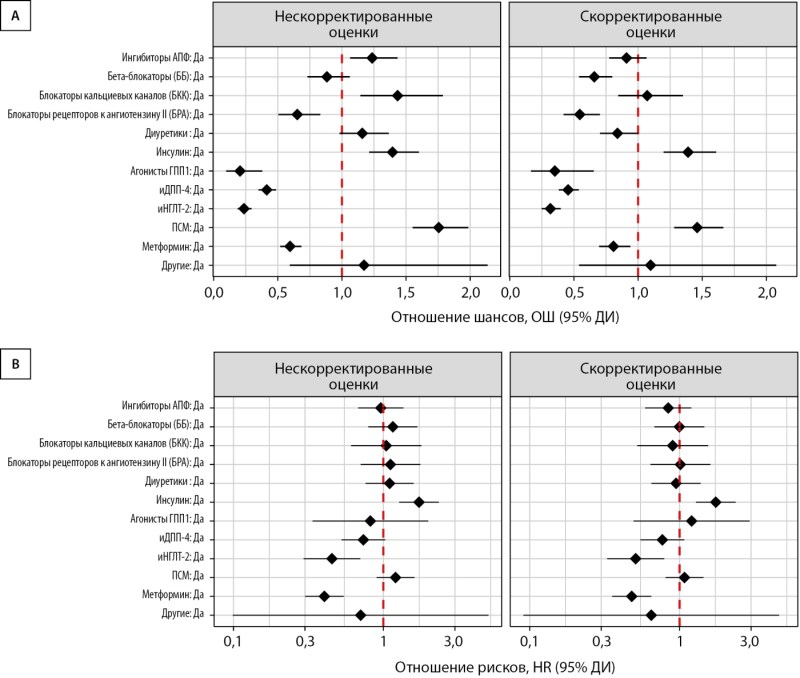
In the long-term period after COVID-19, the following factors were associated with increased mortality risk: older age (OR 1.06; 95% CI 1.04–1.07, p<0.001), longer diabetes duration (OR 1.03; 95% CI 1.01–1.05, p<0.05), and older age at diabetes onset (OR 1.04; 95% CI 1.02–1.05, p<0.001).

A lower risk of death in the long-term period was associated with the use of SGLT2 inhibitors (HR 0.45; 95% CI 0.29–0.70, p<0.001) and metformin (HR 0.40; 95% CI 0.30–0.54, p<0.001).

CONCLUSION: Mortality was higher among patients with history of COVID-19 compared to control group. Increase in mortality was primarily due to deaths in acute phase of infection. After adjusting for sex, age, following factors were independently associated with increased long-term mortality in T2DM patients after COVID-19: older age, male sex, insulin therapy. Protective factors included use of SGLT2 inhibitors and metformin.

148-156 356
Abstract

BACKGROUND: Diabetic neuroosteoarthropathy (Charcot foot) is a severe complication of diabetes mellitus, leading to foot deformity and loss of function. The pathogenesis involves disturbances in bone metabolism; however, the role of vitamin D metabolism, particularly its individual metabolites, in Charcot foot remains poorly understood.

AIM: To investigate the levels of vitamin D metabolites and their relationship with phosphate-calcium metabolism parameters and bone tissue status in patients with type 1 and type 2 diabetes mellitus complicated by Charcot foot.

MATERIALS AND METHODS: A single-center cross-sectional study was conducted, including 30 patients with Charcot foot. All participants underwent a comprehensive examination, which included assessment of a wide range of vitamin D metabolites using liquid chromatography with tandem mass spectrometry (LC-MS/MS), bone turnover markers, bone mineral density (BMD) by dual-energy X-ray absorptiometry (DXA), and evaluation of clinical and laboratory parameters.

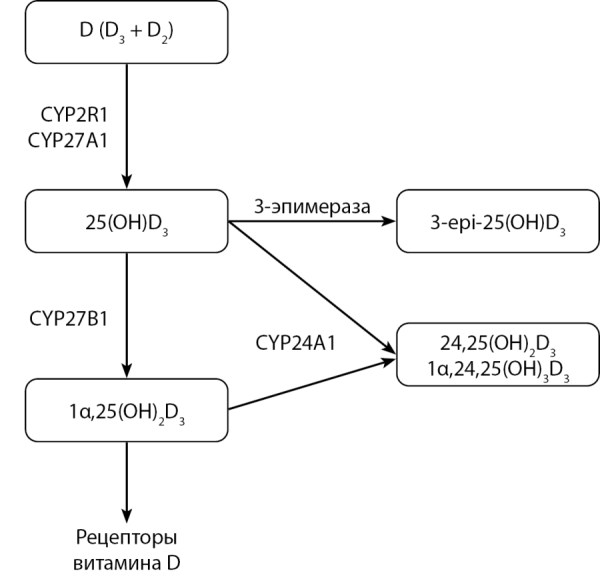
RESULTS: Deficiency or insufficiency of 25(OH)D was detected in 64% of patients (median 17.1 ng/mL). Low levels of the active metabolite 1,25(OH)₂D₃ and the catabolite 24,25(OH)₂D₃ were observed, indicating systemic dysregulation of vitamin D metabolism. A statistically significant negative correlation was found between BMI and 3-epi-25(OH)D₃ levels (R=-0.43; p=0.041), as well as between the duration of insulin therapy and folate levels (R=-0.58; p=0.037). Patients with diabetic nephropathy had significantly higher levels of the bone resorption marker β-crosslap (p=0.003). Expected negative correlations were found between femoral neck BMD and parathyroid hormone (PTH) levels (R=-0.56; p=0.010) and albumin-corrected calcium levels (R=-0.50; p=0.016).

CONCLUSION: Patients with Charcot foot exhibit profound, multi-level disturbances in vitamin D metabolism that are universal and weakly associated with other microvascular complications. The presence of diabetic nephropathy is associated with significantly increased bone resorption. These findings justify the need for routine screening and correction of vitamin D and folate deficiencies in the comprehensive management of these patients.

157-168 383
Abstract

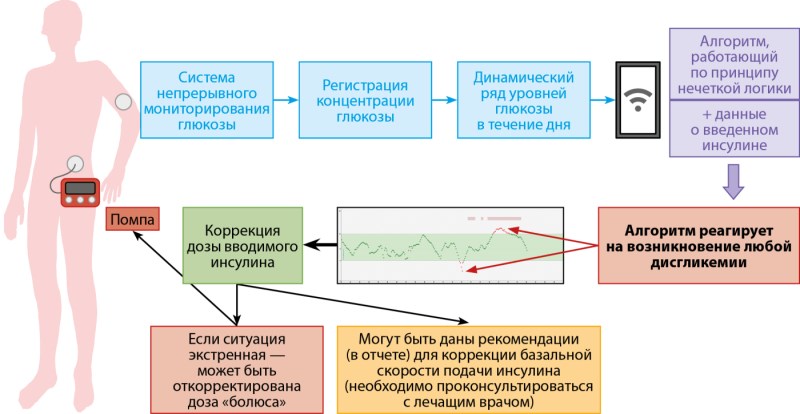
BACKGROUND: The problem of achieving target glycemic control in patients with diabetes mellitus type 1 (T1DM) remains relevant. Currently, new, more technologically advanced methods of insulin therapy (IT) are being actively developed — one of them is the IT method of a closed loop (do-it-yourself closed loop system, DIY-CLS). This type of therapy is not registered in Russia, however, patients install these systems themselves, in connection with which it seems important to discuss the principle of DIY-CLS operation, the possibilities and prospects of their use.

OBJECTIVE: To evaluate the glycemic control indicators, the frequency of acute complications of diabetes in patients with type 1 diabetes on different types of therapy.

MATERIALS AND METHODS: We observed 98 patients who were divided into 3 groups: patients using MII (n=40), patients with CSII (n=40) and patients with DIY-CLS (n=18). All groups were comparable in age, sex and the duration of T1DM history.

RESULTS: The majority of patients were women (73.47%), the average age was 33.3±2.4 years, the duration of diabetes was 17.1±2.2 years. It was found that in patients from the DIY-CLS group, compared with the MII and CSII groups, according to continuous glucose monitoring, the time in range was significantly higher, the mean glucose, standard deviation, time above range 10.1–13.9 mmol/l and time above range >13.9 mmol/l were significantly lower. The number of hypoglycemic states and hyperglycemic events leading to the development of ketosis was comparable.

CONCLUSION: Glycemic control values were significantly better in patients using DIY-CLS. Patients in the DIY-CLS group more often achieved target time above range and coefficient of variation levels.

169-182 292
Abstract

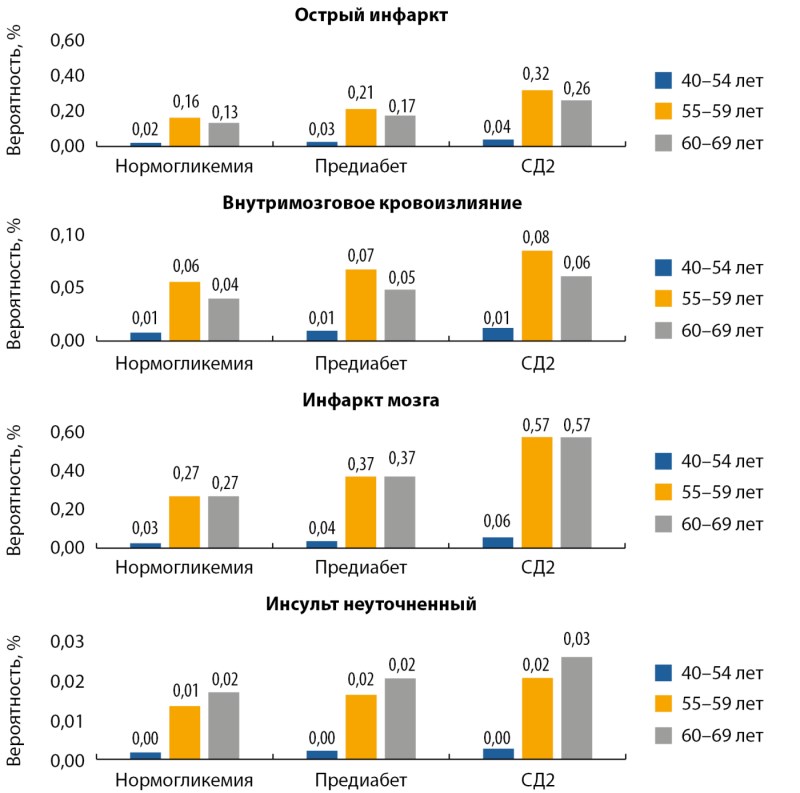
BACKGROUND: Patients with prediabetes have an increased risk of developing type 2 diabetes mellitus (T2DM) and cardiovascular disease (CVD). However, the economic impact of using medications to treat prediabetes has been insufficiently studied.

AIM: The purpose of the study is to perform a clinical and economic evaluation of extended-release (XR) metformin for the treatment of prediabetes, assess its healthcare budgetary impact, and determine its potential to contribute to achieving the target indicators of Federal healthcare programs.

MATERIALS AND METHODS: We compared XR metformin therapy with no medication therapy among patients aged 40–59 years with prediabetes, for whom lifestyle interventions had failed to achieve adequate glycemic control. A Markov model was developed to describe the number of patients with prediabetes over a 10-year horizon using comparison variants, the incidence of adverse cardiovascular events, and mortality from all and cardiovascular causes. The analysis accounted for out-of-pocket expenditures for pharmacotherapy and public healthcare system costs for the management and monitoring of prediabetes and its complications, including T2DM.

RESULTS: Over a 10-year period, the use of XR metformin in patients with prediabetes could prevent 63 524 deaths, including 41.6 thousand from CVD. The estimated additional annual out-of-pocket expenditures for 100% coverage with XR metformin are approximately 4.3 billion RUB. Due to reducing the incidence of T2DM and CVD, budget savings on T2DM and CVD treatment, outpatient care, and the purchase of medical devices over 10 years are estimated at 4.7 billion RUB per year. From a healthcare system perspective (public healthcare + out-of-pocket expenditures), the average net annual savings are 410 million RUB.

CONCLUSION: The use of XR metformin in patients with prediabetes can reduce the rate of progression to T2D, the incidence of serious CVD events, and mortality (both all-cause and cardiovascular) and thus contribute to achieving the goals set in the federal projects "Combatting Cardiovascular Diseases" and "Combatting Diabetes Mellitus." Moreover, using XR metformin in patients with prediabetes could lead to a net reduction in public healthcare expenditures, with the long-term savings exceeding the additional costs borne by individuals for metformin therapy.

183-190 230
Abstract

BACKGROUND: With the onset of the COVID-19 pandemic, restrictions were introduced on the availability of planned medical care, which could negatively affect the compensation of children, especially with newly diagnosed type 1 diabetes mellitus (T1DM). During this period, there was a need to improve the methods of dynamic monitoring of children with the manifestation of type 1 diabetes using modern remote technologies from the first days of discharge from the hospital.

AIM: To evaluate the effectiveness of methods for dynamic observation of children with manifestation of T1DM, optimized in conditions of limited availability of planned medical care.

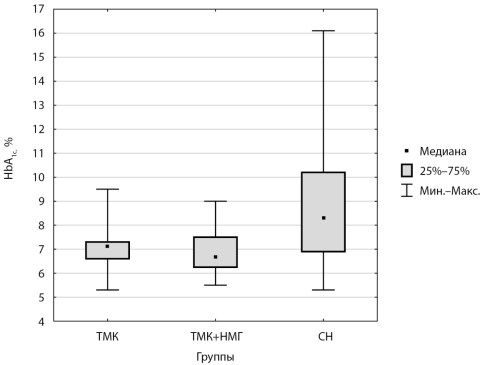
MATERIALS AND METHODS: A single-center, 12-month prospective comparative study was conducted in three populations of children under 17 years of age with manifestation of T1DM during the COVID-19 pandemic, who were monitored using a standard approach, as well as methods optimized with the use of telemedicine consultations (TMC) and CGM and assessment of the HbA1c level and the proportion of patients with HbA1c<7.0% at the endpoint of observation.

RESULTS: The study included 137 children: 61 — standard observation (SO) group; 25 — TMC group and 51 — TMC+CGM group, which were comparable with each other by age, gender, proportion of children in puberty, anthropometric data, as well as by the severity of T1DM manifestation and daily insulin doses (p>0.05). After 12 months of observation, a significant decrease in the HbA1c level was found in the TMC and TMC+CGM groups compared to the SO group (7.1% and 6.7% vs. 8.3%; p=0.000), while HbA1c did not differ between the TMC and TMC+CGM groups (p=0.642). The proportion of patients who achieved HbA1c<7.0% in the TMC and TMC+CGM groups statistically significantly exceeded the proportion of patients in the SO group at the endpoint of observation (48.0% and 56.9% vs. 27.9%; p<0.001), however, the TMC and TMC+CGM groups did not differ from each other (p=0.466).

СONCLUSION: Methods of remote dynamic monitoring of children with manifestation of T1DM demonstrated better efficiency in achieving and maintaining glycemic control compared to standard monitoring, which dictates the need for their wider use in clinical practice. The main factor contributing to the achievement of compensation of T1DM in children is the availability of specialized medical care and regular consultations with a doctor.

REVIEWS

191-202 279
Abstract

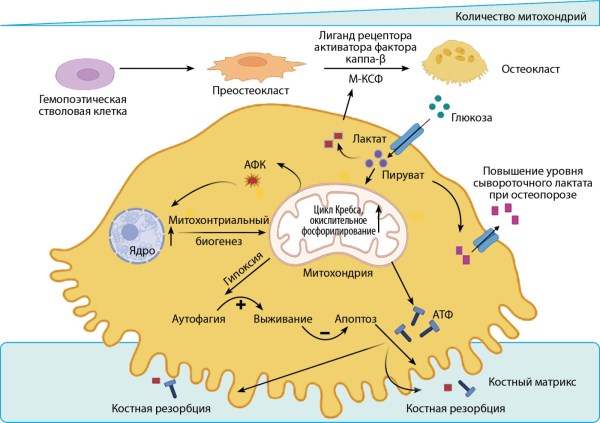
Interest in studying intermediary metabolic products and cellular bioenergetics is driven by the global increase in the prevalence of metabolic diseases. Structural features of bone tissue associated with an increased risk of fragility fractures in diabetes mellitus are associated with complex disorders of bone metabolism, including the accumulation of advanced glycation end products, suppression of osteoblastogenesis, increased sclerostin expression, development of oxidative stress and enhancement of catabolic processes under the influence of hyperglycemia. Pathogenetic changes in osteoporosis, in turn, are associated with complex alterations in cellular energy metabolism, mitochondrial function, and purine homeostasis, which contribute to a progressive imbalance in bone remodeling and a decrease in the biomechanical properties of bone tissue. This literature review provides information on the main sources and pathways of adenosine triphosphate synthesis in bone cells, the mechanisms of energy metabolism regulation under normal conditions, as well as under conditions of hyperglycemia in diabetes mellitus and under conditions of age-related changes in the body with the development of osteoporosis. The presented data reveal promising prospects for the development of targeted therapies aimed at the described metabolic alterations, offering a potential approach for the prevention and management of bone disorders.

203-214 383
Abstract

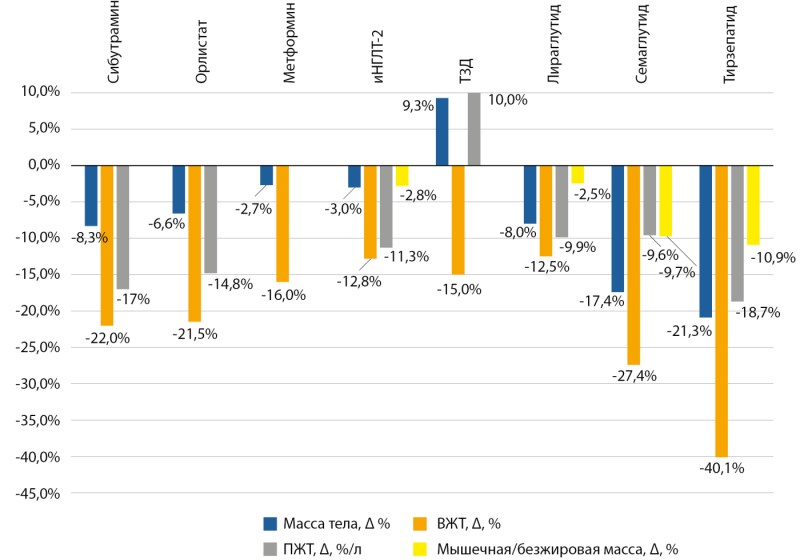
The prevalence of obesity and its associated diseases continues to grow steadily worldwide, despite significant improvements in various treatment approaches. The advent of GLP-1 and GIP agonists and the development of bariatric surgery have significantly improved obesity treatment options, complementing dietary interventions, physical exercise, and a number of drugs that have long been used in clinical practice. At the same time weight loss strategies differ in their effects on fat and muscle tissue. It is well known that subcutaneous (SAT) and visceral (VAT) adipose tissues make unequal contributions to metabolic disorders in obesity, and reducing visceral adipose tissue is the most important goal during weight loss. Maintaining metabolically active muscle tissue and prevention of sarcopenia is also a very important issue. The question of different obesity treatment strategies impact on adipose and muscle tissue has attracted interest among researchers and clinicians, and therefore we have considered it in this review.

215-223 519
Abstract

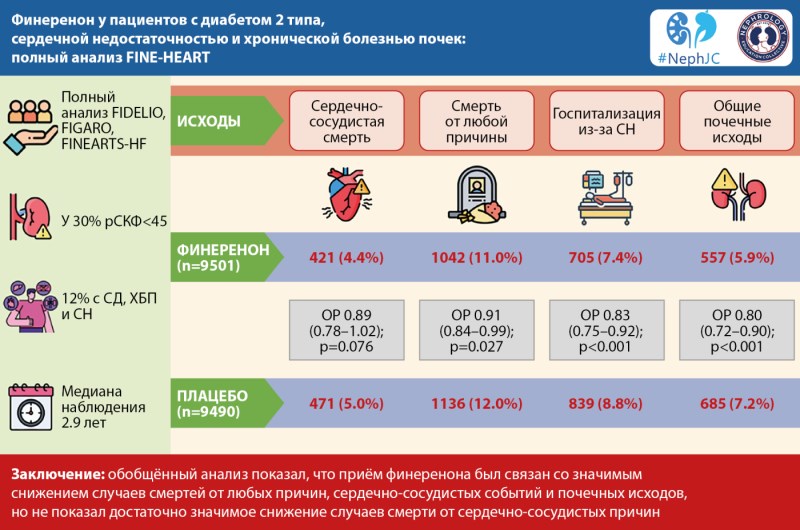
The article is devoted to the pharmacological and impairment features of finerenone, a new non-steroidal antagonist of mineralocorticoid receptors (AMR), like other drugs, suppresses the activity of the renin-angiotensin-aldosterone system (RAAS), which plays a key role in the pathogenesis of cardiovascular diseases (CVD). Compared to other AMRs, finerenone more selectively and more tightly binds to mineralocorticoid receptors, which causes its pronounced anti-inflammatory, antifibrotic, antioxidant and other effects not only in the kidneys, but also in the heart and blood vessels. In several randomized trials — FIDELIO-DKD, FIGARO-DKD — in patients with type 2 diabetes mellitus (DM2) and chronic kidney disease (CKD) with albuinuria (AU), finerenone demonstrated a significant reduction of renal dysfunction progression, and in the treatment of FINEARTS-HF in patients with heart failure (HF) with a left ventricular ejection fraction ≥40%, finerenone was associated with a relatively low incidence of worsening HF and cardiovascular mortality compared with placebo. Pooled data from these three studies show a reduction of all-cause mortality, worsening HF, and renal adverse outcomes with finerenone.

In current guidelines, the finerenone is recommended for patients with DM2 and CKD with AU during cardiovascular events and renal failure. The article describe three clinical cases in which patients were prescribed finerenone as part of the preparation of the evidence base for this. One of these examples shows an improvement in renal function after the addition of finerenone alone.

CASE REPORT

224-230 224
Abstract

We report a rare clinical case of the coexistence of two autoimmune diseases: type 1 diabetes mellitus and granulomatosis with polyangiitis. Both conditions share a common target — small-caliber blood vessels — which contributes to overlapping mechanisms of tissue injury, progressive microcirculatory impairment, and the development of multiple diabetes-related complications. The requirement for systemic glucocorticosteroids as pathogenetic therapy represents a particular therapeutic challenge: while indispensable for the control of vasculitis, they simultaneously impair glucose metabolism, exacerbate glycemic variability, and slow wound healing. The concurrence of these pathologies is exceedingly uncommon and typically manifests as a syndrome of mutual aggravation with a poor clinical prognosis. In cases of lower-limb ulcerations, lesions should be regarded as potentially chronic and treatment-refractory, thereby raising the question of amputation. Comprehensive monitoring, including advanced glycemic control technologies and regular evaluation of vasculitis activity, is essential in such patients. This case highlights the clinical features, management strategy, and pathogenetic mechanisms underlying complications, underscoring the need for individualized, multidisciplinary approaches.

Announcements

2024-03-21

Журнал "Сахарный диабет" входит в Перечень отечественных изданий ВАК

Согласно Приказу Минобрнауки №1586, журнал «Сахарный диабет» включен в Перечень отечественных изданий Высшей аттестационной комиссии, в котором должны быть опубликованы основные научные результаты диссертаций на соискание ученой степени кандидата и доктора наук, так как входит в международные реферативные базы данных Scopus и Web of Science.

2024-03-21

"Сахарный диабет" относится к категории изданий К1 (ВАК)

Согласно Письму Минобрнауки №02-1198 от 6 декабря 2022 г. "О перечне рецензируемых научных изданий", журнал "Сахарный диабет" приравнен к изданиям категории К1 на основании вхождения в международные базы данных Scopus и Web of Science.

More Announcements...